Most people planning a rural build assume the electrical question can wait until the foundation is poured. That assumption quietly sets the budget and the layout before anyone checks what a utility connection would actually cost. Off-grid Ontario planning works best when it starts at the drawing stage rather than after construction begins.
Energy independence is a design decision long before it becomes an equipment purchase. Off-grid Ontario systems deliver the strongest results when solar generation, battery storage and building layout are planned together by designers who understand northern conditions. That coordination turns a remote site from an obstacle into a property with predictable running costs and genuine self-sufficiency.
Remote Building Sites Change the Electrical Question Early
Grid Access Assumed Rather than Costed: Utility connection charges in rural Ontario rise with distance from the nearest distribution line, and a site that looks close on a map can sit well beyond the point where connection stays affordable. Many owners discover this after land is purchased and drawings are approved. By then the electrical plan is being shaped by a bill nobody budgeted for.
Decisions Locked in before the Power Question Is Settled: Comparing line extension costs against a complete solar and storage system early is the single decision that shapes everything downstream. In everyday practice, off-grid designers regularly meet owners whose roof pitch, window placement and appliance choices were fixed before anyone measured the site’s solar exposure. Reworking those choices after framing costs far more than planning them together.
Building around Solar Produces a Leaner and Cheaper System
Layout Choices Reduce the Generating Capacity Needed: Every watt a building does not waste is a watt the system never has to generate or store. Orientation, window placement, insulation depth and efficient appliances lower the daily load, which shrinks the array and the battery bank at the same time. Off-grid Ontario builds designed this way cost less to install and less to run.
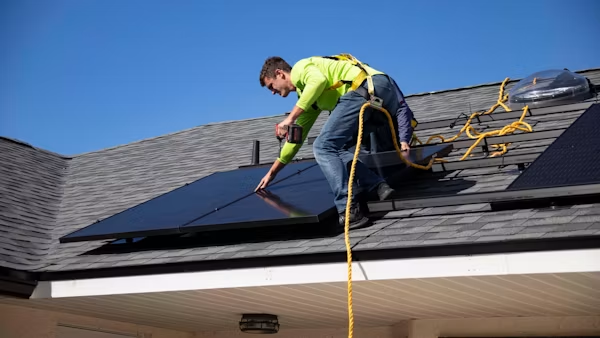
Solar Exposure Measured before the Roof Is Framed: Site assessment before framing determines whether the roof, a ground mount or a pole mount will carry the array. Northern Ontario receives fewer peak sun hours in December than in June, so systems are sized around the leanest month rather than the annual average. Tree lines, hills and future growth all shape that calculation.
Grid Extension Weighed against Solar and Storage on Remote Land
Utility Connection Compared with a Standalone System: Grid extension makes sense on sites close to existing infrastructure, where the one-time charge stays modest and monthly bills remain the only ongoing cost. A standalone system suits land beyond that threshold, trading a higher upfront spend for no delivery charges and no exposure to rate increases. The trade-off is maintenance responsibility and a battery replacement cycle.
Generator Dependence Set against Solar with Storage: Generators alone give power on demand but burn fuel that must be hauled in, and they run loudly through the hours a household is most likely to be home. Solar panels with storage covers daily demand silently and keeps a smaller generator for deep winter or extended cloud. That pairing reduces fuel spend without removing the safety net.
Early Design Decisions Protect System Life and Running Costs
Delay Narrows the Options a Site Can Still Support: Postponing the energy plan removes choices rather than preserving them. Once foundations are set, the best array location may already be shaded by the building itself, and cable runs grow longer and more expensive. Owners who wait often end up with a system shaped by what the finished structure permits instead of what the household needs.
Battery Chemistry Chosen for Northern Winters: Cold weather affects every battery type, and the choice made at design stage governs replacement costs for a decade or more. Lithium banks need charging temperatures above freezing, so they require conditioned space, while flooded lead acid tolerates cold better but demands regular topping up. Off-grid Ontario installations last longest when chemistry is matched to the building from the outset.
What Property Owners Should Settle before Construction Starts
Checks Worth Completing at the Planning Stage: A handful of early checks decides whether a system performs or simply exists. Off-grid Ontario projects reward owners who resolve these points before drawings are finalised, because changes on paper cost almost nothing compared with changes on site. Each item below affects both the installed price and the long-term reliability of the build.
- A written quote for utility connection gives the honest baseline every other option is measured against.
- Water pumping, heating and workshop equipment must be counted as load, not treated as extras.
- Snow shedding and winter access shape mounting choice more than summer performance figures.
- Electrical work needs a permit and inspection, so licensed contractors belong in early planning.
- Space for the battery bank and inverter belongs on the floor plan from the beginning.
A Home Designed to Carry Its Own Power
A property planned around its own generation from the first sketch behaves differently from one adapted later. Loads stay modest, the array sits where the sun actually falls, and the battery room was drawn in rather than squeezed in. Owners gain steady power, low running costs and a building that suits the land it stands on.
Waiting until the walls are up narrows what the site can support and turns straightforward choices into expensive corrections. A proper site analysis and system design consultation settles capacity, mounting and storage before any of it is fixed in concrete. Book a site assessment and design consultation while the plans can still change.